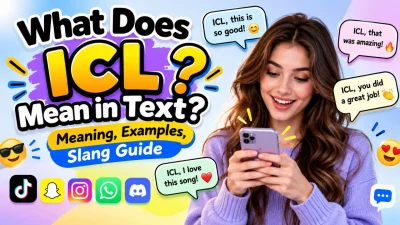
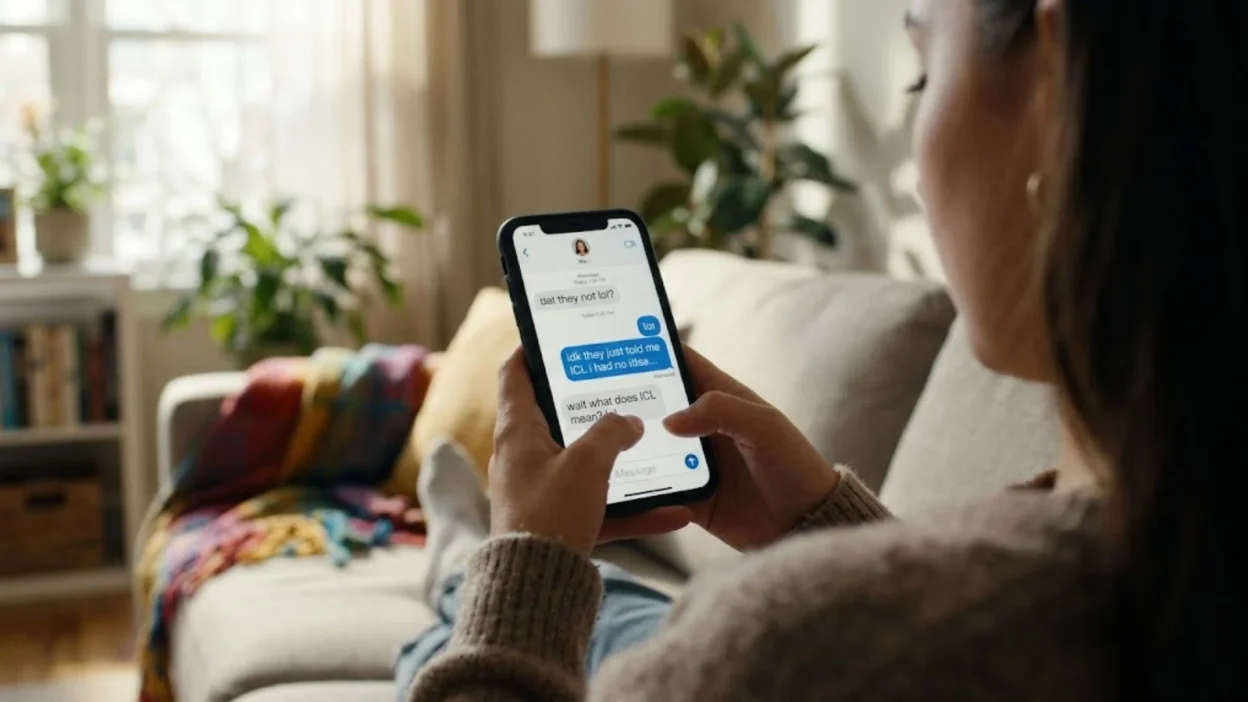
Have you ever received a message that starts with “ICL” and wondered what those three letters mean? You are not alone! Internet slang can feel like a secret language, especially when friends use short expressions without explaining them.
The most common ICL meaning in texting and social media is “I Can’t Lie.” People use this abbreviation before sharing an honest opinion, a personal feeling, a confession, or a straightforward reaction. For example, “ICL, that movie was amazing” means “I can’t lie, that movie was amazing.”
You may see ICL in text messages, TikTok comments, Instagram captions, Snapchat conversations, and group chats. However, its tone can change depending on the words around it. Sometimes it introduces a compliment, while other times it prepares someone for an unexpected opinion.
In this guide, you will learn what ICL means, how people use it, how it compares with similar slang, and how to reply when someone sends it to you.
What Does ICL Mean?
ICL stands for “I Can’t Lie.” It is an informal internet abbreviation that people use to emphasize honesty or introduce a genuine thought.
Think of ICL as a shorter way to say “honestly” or “to be honest.” It tells the reader that the speaker wants to share an opinion directly.
For example, imagine your friend asks whether you enjoyed a new restaurant. You might reply, “ICL, the food was better than I expected.” Your message means that you genuinely enjoyed the meal.
The Simple Meaning of ICL
The easiest way to understand ICL is to replace it with the full phrase “I can’t lie.”
Here are a few examples:
- “ICL, I’m really tired today.” means “I can’t lie, I’m really tired today.”
- “ICL, your presentation was great.” means “I can’t lie, your presentation was great.”
- “ICL, I forgot about the meeting.” means “I can’t lie, I forgot about the meeting.”
- “ICL, that game was difficult.” means “I can’t lie, that game was difficult.”
In each example, the abbreviation adds emphasis to the statement. It does not change the basic message.
Why Do People Write ICL Instead of the Full Phrase?
Online conversations often move quickly, so people shorten common expressions to save typing time. Three letters can communicate an idea that would otherwise require several words.
ICL also gives messages a casual, conversational feel. Rather than sounding like a formal statement, it makes an opinion feel more like something a friend would say during a relaxed conversation.
Of course, the abbreviation is optional. Writing “I can’t lie” or “honestly” communicates the same basic idea.
ICL Meaning in Text Messages
In texting, ICL usually introduces an honest opinion, feeling, or admission. People use it when chatting with friends, family members, classmates, or other people they know well.
The expression can appear before positive, negative, or neutral statements. Therefore, you need to read the complete message to understand the sender’s intention.
Examples of ICL in Everyday Texting
Consider these common texting situations:
- Talking about food: “ICL, that pizza was delicious.”
- Discussing school: “ICL, today’s assignment was harder than I expected.”
- Sharing a feeling: “ICL, I’ve missed talking to you.”
- Admitting a mistake: “ICL, I forgot to bring my notebook.”
- Giving an opinion: “ICL, I prefer the original version.”
- Talking about a movie: “ICL, the ending surprised me.”
- Discussing plans: “ICL, I’d rather stay home tonight.”
- Complimenting someone: “ICL, you did a fantastic job.”
Each message uses ICL to introduce a thought that the sender wants to express honestly.
A Sample Conversation Using ICL
Here is how the abbreviation might appear in a normal conversation.
Alex: Did you like the new movie?
Jordan: ICL, I thought it would be boring, but it was actually great.
Alex: Really? What did you like about it?
Jordan: The story was interesting, and the ending was brilliant.
In this exchange, ICL emphasizes Jordan’s genuine reaction. The abbreviation does not create a new meaning; it simply makes the response sound more casual.
Can ICL Appear at the End of a Message?
Yes. Although people often place ICL at the beginning of a sentence, they can also use it at the end to emphasize an opinion.
For example:
- “That was the best episode, ICL.”
- “I needed that break, ICL.”
- “You were right about the song, ICL.”
- “The test was difficult, ICL.”
The meaning remains “I can’t lie.” Its position may vary according to the sender’s writing style.
ICL Meaning on Social Media
Social media users often rely on abbreviations to make captions, comments, and direct messages feel natural. ICL fits this style because it introduces an opinion without requiring a long explanation.
You might encounter it while reading a post about music, fashion, entertainment, everyday experiences, or personal achievements.
ICL Meaning on TikTok
On TikTok, ICL can introduce a reaction to a video, trend, song, or creator. It often appears in comments where users share their immediate opinions.
For example:
- “ICL, this trend is actually fun.”
- “ICL, this creator deserves more attention.”
- “ICL, I watched this video five times.”
- “ICL, the ending caught me off guard.”
- “ICL, this is the best version I’ve seen.”
In these examples, the abbreviation adds emphasis to the viewer’s reaction. It can appear in a caption or comment, depending on what the user wants to say.
ICL Meaning on Instagram
Instagram users may include ICL in Stories, Reels comments, captions, and direct messages. The expression works particularly well when someone wants to share a quick opinion about a photo, outfit, activity, or experience.
Examples include:
- “ICL, this picture turned out perfectly.”
- “ICL, I love this color combination.”
- “ICL, that was a memorable day.”
- “ICL, your new hairstyle looks amazing.”
- “ICL, this place looks beautiful.”
The abbreviation can make a compliment sound spontaneous. However, the rest of the message still determines what the sender means.
ICL Meaning on Snapchat
Snapchat conversations are often casual and brief, making abbreviations useful for quick exchanges between friends.
For example:
- “ICL, I’m exhausted today.”
- “ICL, that filter looks hilarious.”
- “ICL, I forgot to reply yesterday.”
- “ICL, your story made me laugh.”
- “ICL, I need a weekend off.”
When you see ICL in a Snapchat message, the sender is generally introducing an honest thought or reaction.
ICL Meaning on WhatsApp and in Group Chats
ICL can also appear in WhatsApp messages and other group conversations. Friends may use it when discussing plans, sharing jokes, reviewing a movie, or talking about their day.
For example:
Sam: Are we still meeting at six?
Taylor: ICL, I’d prefer seven if everyone is available.
Here, Taylor is expressing a genuine preference. The abbreviation adds a casual tone without changing the request.
ICL Meaning on Discord and Other Online Communities
People in gaming communities and online discussion groups may use ICL when commenting on a match, game update, strategy, or shared experience.
Examples include:
- “ICL, that match was intense.”
- “ICL, we need a better strategy.”
- “ICL, your teamwork was impressive.”
- “ICL, this update improved the game.”
- “ICL, that final round was stressful.”
The meaning is essentially the same across these platforms. The surrounding conversation helps you understand the specific opinion being expressed.
Different Ways People Use ICL
ICL is not limited to one kind of statement. It can introduce praise, criticism, an admission, or a simple observation.
Understanding these different uses will help you recognize the intended tone more easily.
ICL for Compliments
People sometimes use ICL before giving someone a genuine compliment. It can make the praise sound spontaneous rather than carefully prepared.
Examples:
- “ICL, your drawing looks incredible.”
- “ICL, you explained that really well.”
- “ICL, your new haircut suits you.”
- “ICL, you made everyone feel welcome.”
- “ICL, that was a brilliant idea.”
A compliment does not have to be dramatic. Even a simple comment about someone’s effort can use ICL naturally.
ICL for Negative Opinions
ICL can also introduce criticism or disagreement. In these cases, the sender may want to make it clear that the following statement reflects their actual opinion.
Examples:
- “ICL, I didn’t enjoy that movie.”
- “ICL, the instructions were confusing.”
- “ICL, this update feels unnecessary.”
- “ICL, I expected a better result.”
- “ICL, that plan needs more work.”
Keep in mind that honesty does not automatically make a statement kind. If you use ICL before criticism, choose respectful words and consider how the other person might feel.
ICL for Confessions and Admissions
Sometimes people use ICL to admit something they forgot, misunderstood, or did not expect.
Examples:
- “ICL, I completely forgot about the deadline.”
- “ICL, I was nervous before the presentation.”
- “ICL, I didn’t understand the instructions.”
- “ICL, I thought the event started tomorrow.”
- “ICL, I need some help with this task.”
In these situations, ICL introduces a personal admission. It can make the message feel more direct and open.
ICL for Surprising Reactions
ICL can also introduce a reaction that differs from what someone originally expected.
Examples:
- “ICL, I thought the book would be boring, but I loved it.”
- “ICL, I didn’t expect that song to be so catchy.”
- “ICL, the new design looks much better.”
- “ICL, I thought the journey would take longer.”
- “ICL, that was more fun than I imagined.”
These examples show how the abbreviation can emphasize an unexpected opinion or change of mind.
ICL vs. NGL vs. TBH
If you are learning internet slang, you may have seen ICL alongside NGL and TBH. These expressions are similar because all three can introduce an honest opinion.
However, their full forms are different.
SlangFull formSimple meaningICLI Can’t LieHonestlyNGLNot Gonna LieHonestlyTBHTo Be HonestSpeaking honestlyFRFor RealSeriously or genuinelyIMOIn My OpinionExpressing a personal view
What Is the Difference Between ICL and NGL?
ICL means “I can’t lie,” while NGL means “not gonna lie.” Both expressions are used to introduce a candid opinion or admission.
For example:
- “ICL, this song is amazing.”
- “NGL, this song is amazing.”
Both sentences communicate essentially the same idea. The choice often depends on the person’s preferred texting style.
Neither abbreviation guarantees that the statement is objectively true. They simply indicate how the sender wants the statement to be understood.
What Is the Difference Between ICL and TBH?
TBH stands for “to be honest.” It can introduce an opinion, answer a question directly, or express a personal feeling.
Compare these examples:
- “ICL, I really enjoyed the event.”
- “TBH, I really enjoyed the event.”
The main message is the same. However, TBH can sound slightly more neutral in some contexts because it directly means “to be honest.”
In everyday messaging, both are useful informal expressions.
Can You Use ICL and NGL Together?
You may encounter combinations such as “ICL, NGL, that was funny” in online conversations. The writer is emphasizing the same idea twice.
Although people may use both expressions together for extra emphasis or humor, doing so is usually unnecessary. One abbreviation is generally enough to make the point.
For a clearer message, write “ICL, that was funny” or “NGL, that was funny.”
How to Reply When Someone Says ICL
Knowing the ICL meaning is useful, but understanding how to respond can be just as important. Your reply should depend on what the person says after the abbreviation.
You do not need to use another slang term just because the sender used one.
Friendly Replies to ICL
If someone shares a positive opinion, you can respond naturally.
Message: “ICL, your presentation was excellent.”
Possible replies:
- “Thank you! I’m glad you liked it.”
- “I really appreciate that.”
- “Thanks, I worked hard on it.”
- “That’s kind of you to say!”
These responses acknowledge the compliment without making the conversation awkward.
Replies When Someone Shares a Negative Opinion
If someone says, “ICL, I didn’t like that movie,” you can invite them to explain their view.
Try replies such as:
- “Fair enough! What didn’t you like?”
- “Really? I thought it was interesting.”
- “That’s understandable. Everyone has different tastes.”
- “Which part disappointed you?”
These responses keep the conversation open, even when you disagree.
Replies When Someone Admits a Mistake
Suppose a friend writes, “ICL, I forgot about our meeting.”
You could answer:
- “No worries. Let’s arrange another time.”
- “Thanks for letting me know.”
- “It happens! What time works for you?”
- “That’s okay. We’ll figure it out.”
A calm response can help resolve the situation without unnecessary tension.
Do You Have to Reply With ICL?
No. ICL is simply an abbreviation, not a special question or command. You can answer the actual message in your usual style.
For example, if someone says, “ICL, I love this song,” you could reply, “Same! It’s been stuck in my head all day.”
The goal is to communicate naturally rather than force slang into every response.
Is ICL Formal or Informal?
ICL is informal internet slang. It is most appropriate for relaxed conversations with friends, familiar contacts, and people who understand online abbreviations.
Although the expression is easy to understand once explained, it may appear unclear or unprofessional in formal communication.
When Is It Appropriate to Use ICL?
ICL generally works well in:
- Text messages with friends.
- Casual social media comments.
- Group chats.
- Informal online discussions.
- Personal captions and posts.
- Conversations about everyday experiences.
For example, “ICL, I enjoyed the workshop” is perfectly understandable in a casual message to a friend.
When Should You Avoid Using ICL?
In professional or academic communication, writing the full expression is often clearer.
Avoid using ICL in situations such as:
- Job applications.
- Formal business emails.
- Academic assignments.
- Official reports.
- Professional client proposals.
- Important workplace communications.
Instead of writing “ICL, the results were disappointing,” you could write, “To be honest, the results were disappointing.”
The second version is clearer for readers who do not use internet slang regularly.
Common Misunderstandings About ICL
Internet abbreviations can be confusing because the same letters may represent different terms in different fields. Context is essential when interpreting an unfamiliar abbreviation.
Does ICL Always Mean I Can’t Lie?
In casual texting and social media slang, ICL commonly means “I can’t lie.” However, the abbreviation can have other meanings in specialized settings, including technology, medicine, and business.
For example, in eye care, ICL can refer to an implantable collamer lens. Therefore, you should consider the subject of the conversation before deciding which meaning applies.
If someone uses ICL while discussing a medical procedure, the slang interpretation may not be relevant.
Does ICL Mean Someone Is Telling the Truth?
Not necessarily. ICL signals that the speaker is presenting a statement as honest, but it does not prove that the statement is accurate.
For instance, someone might write, “ICL, I finished the assignment,” even if they have not completed it. The abbreviation communicates their intended tone, not independently verified facts.
As with any conversation, use the available context to judge what someone means.
Is ICL Always Negative?
No. Some people use ICL before criticism, but it can introduce positive and neutral statements as well.
For example:
- Positive: “ICL, you did a wonderful job.”
- Negative: “ICL, that was a poor decision.”
- Neutral: “ICL, I forgot my keys.”
The abbreviation itself does not determine whether the message is positive or negative. The rest of the sentence provides that information.
Is ICL the Same as Saying “No Cap”?
Not exactly. “No cap” is another informal expression associated with honesty or the absence of exaggeration. ICL literally expands to “I can’t lie.”
The two expressions can communicate similar ideas, but they are different phrases and may carry slightly different tones depending on the speaker and context.
You do not need to know every slang expression to understand ICL. Start with the main meaning and use the surrounding words as your guide.
How to Use ICL Naturally in Your Own Messages
Once you understand the abbreviation, using it is fairly simple. The key is to make sure it fits the conversation rather than inserting it into every sentence.
Keep Your Message Clear
Use ICL before a statement that you want to present as honest or direct.
For example, “ICL, I really enjoyed meeting everyone” sounds natural in a casual chat.
However, adding ICL to every message can make your writing repetitive. Use it when it adds meaning or emphasis.
Match the Tone of the Conversation
If your friends regularly use internet slang, ICL may fit naturally into your messages. On the other hand, if you are speaking with someone who prefers formal language, writing “honestly” may be a better choice.
Good communication is not about using the most abbreviations. It is about helping the other person understand you.
Be Honest Without Being Hurtful
ICL can introduce a direct opinion, but directness should not become an excuse for rudeness.
For example, instead of saying, “ICL, your work is terrible,” you could say, “ICL, I think a few parts could be improved.”
Both statements communicate criticism, but the second offers a more constructive approach.
Learn Slang Through Context
When you encounter an unfamiliar abbreviation, read the full message before interpreting it. The words before and after the abbreviation often reveal its intended meaning.
You can also ask the sender what they mean if the message remains unclear. A quick question is usually better than making an incorrect assumption.
Frequently Asked Questions About ICL Meaning
These common questions offer a quick way to review the meaning and use of ICL in everyday online conversations.
What Does ICL Mean in Texting?
ICL means “I can’t lie” in common texting slang. People use it to introduce an honest opinion, feeling, admission, or reaction. For example, “ICL, that was a great movie” means “I can’t lie, that was a great movie.”
What Does ICL Mean on TikTok?
On TikTok, ICL usually means “I can’t lie.” Users may include it in comments, captions, and discussions when sharing an honest reaction to a video, trend, song, or creator. The surrounding message helps explain the intended tone.
Is ICL the Same as NGL?
ICL and NGL have very similar uses, but their full forms differ. ICL means “I can’t lie,” while NGL means “not gonna lie.” Both can introduce an honest opinion or personal admission in casual online conversations.
Can ICL Be Used as a Compliment?
Yes. Someone might write, “ICL, your outfit looks amazing” to emphasize a genuine compliment. The abbreviation can introduce praise just as easily as criticism or a neutral observation.
Is ICL Appropriate for Professional Messages?
ICL is generally best suited to casual communication. In formal emails, reports, and workplace documents, use alternatives such as “honestly,” “to be honest,” or “I must admit” for a clearer and more professional tone.
What Should I Reply When Someone Texts ICL?
Respond to the meaning of the complete message rather than the abbreviation alone. If the person shares a compliment, say thank you. If they express an opinion, acknowledge it or ask a follow-up question. You do not have to use slang in your reply.
Conclusion
Understanding the ICL meaning makes online conversations easier to follow. In common texting and social media slang, ICL stands for “I Can’t Lie,” an informal expression used to introduce an honest opinion, confession, compliment, or reaction.
You may see it on TikTok, Instagram, Snapchat, WhatsApp, and other online platforms. It can appear at the beginning or end of a sentence, and its tone depends on the message around it.
ICL is similar to NGL and TBH because all three can communicate honesty. However, ICL means “I can’t lie,” NGL means “not gonna lie,” and TBH means “to be honest.” Remember that these abbreviations are informal, so full expressions are usually better for professional communication.
Next time you see ICL in a message, you will know what the sender probably means. Have you come across any other confusing texting abbreviations? Share your favorite example or ask about another slang term in the comments!

Emily Carter is a humor writer passionate about puns, witty jokes, and creating content that brightens your day.